
Key takeaways
- Quitting journaling is a design problem, not a character flaw. Change the page before you blame the person.
- The blank page trap means every session starts with invention, and invention is the most expensive part of writing.
- Day one runs on novelty. Day two asks what to write and gets no answer. That is where most practices die.
- Perfectionism turns the journal into a performance for an audience that does not exist.
- A guided format with a specific daily question removes both culprits before you ever sit down.
Why can't you stick to journaling?
You can't stick to journaling because of two design flaws, not because you lack discipline. The first is perfectionism: the journal slowly becomes a performance, something you have to do well instead of something you simply do. The second is the blank page trap: every session begins with an act of invention, and invention is expensive. Most people who quit journaling blame their character. Nearly all of them should be blaming their setup.
That distinction matters. A character flaw calls for more willpower, which is exactly what people throw at attempt number four before quitting again. A design problem calls for a different design, and a design is far easier to change.
What is the blank page trap?
The blank page trap is the hidden cost of open-ended journaling: before you can write a single word, you have to decide what to write about, and that decision is the hardest part of the session. A blank page hands you infinite options and zero direction, so every entry starts with a small creative project. Invent a topic, then find the first sentence. On a good day that friction is annoying. On a tired day it is disqualifying, and most days are tired days.
We break down how structure changes this in guided journal vs free writing, but the short version is simple: a page that asks you a specific question costs almost nothing to start. A page that asks you nothing costs everything up front.
Why does day two feel so much harder than day one?
Day two feels harder because day one never ran on the journal at all. It ran on novelty. A new journal and a fresh resolve mean the first entry practically writes itself. Then day two arrives and asks the only question that matters: what are you going to write today? Novelty has no answer, because novelty is gone. This is the day two problem, and it is where most journaling practices actually die, mid-week, without a decision to quit ever being made.
If you have felt that freeze on day two or day five, the way through is more practical than you might think. We keep a working list in what to write when you don't know what to write.
How does perfectionism kill a journaling practice?
Perfectionism kills a journaling practice by giving the journal an audience. Somewhere between day one and day ten, the writing stops being for you and starts being for an imagined reader who expects insight and neat handwriting. Skip a day and there is a gap in the record. Write something flat and the streak feels stained. So you postpone until you can do it properly, and properly never comes.
James Pennebaker's expressive writing research points the opposite direction: the benefits of writing about thoughts and feelings showed up even when the writing was rough and never meant to be read. The value is in the act, not the artifact. Nobody grades your journal. The performance you keep avoiding was never actually scheduled.
Is quitting journaling a willpower problem?
No, quitting journaling is almost always a design problem wearing a willpower costume. Open-ended journaling asks you to invent a topic every day, perform well for no one, and keep a habit with no fixed cue or endpoint. That is a heavy system, and heavy systems fail no matter who operates them. Put a specific question on the page inside a defined 30-day arc, and the same person with the same willpower suddenly sticks. For the habit-mechanics side, cues, timing, and how long it really takes, see how to start a journaling habit. This post is the diagnosis. That one is the training plan.
What does a journal designed for sticking look like?
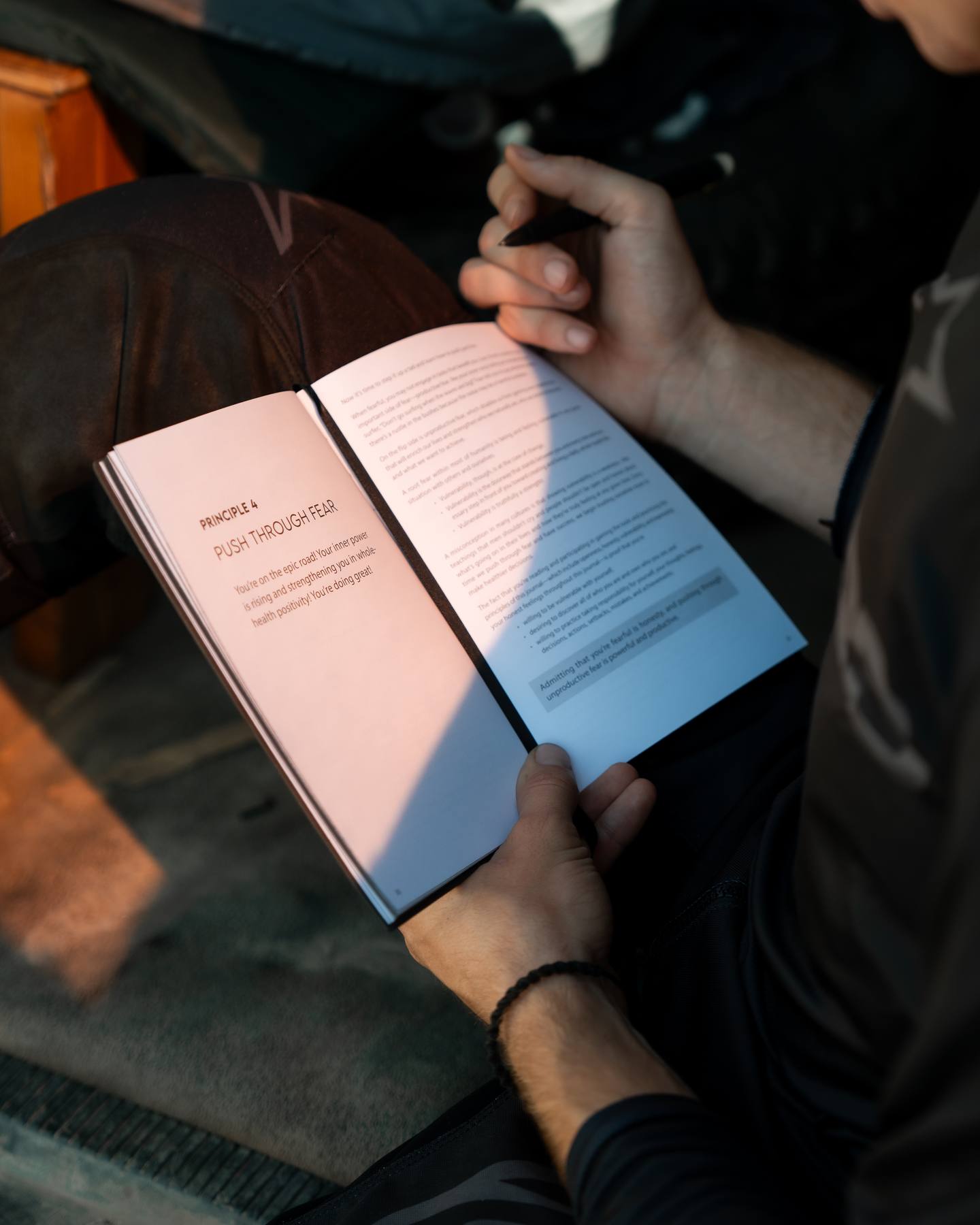
It looks like a journal that removes both culprits before you sit down. The Epic Journal is a 30-day guided morning and evening journal built around 28 Principles of an Epic Life, which means day two asks you a specific question instead of asking you to invent one, and so does day nineteen. The pages are undated, so a missed day is just a missed day, not a hole in the record for your inner perfectionist to stare at. You pick up where you left off.
The prompts are built on a behavioral-health curriculum from an accredited program, and the journal was created by Preston Durnford after 13 years in addiction and recovery work, a field where he watched structure succeed exactly where willpower kept failing. His story is on the about page. If journaling is part of working through something heavy, it belongs alongside professional help, not instead of it. The journal holds a 4.6 out of 5 rating from verified buyers. It is $39 for a single journal, $34 each in a 2-pack, and $32 each in a 3-pack, with free US shipping over $75, and every order ships in 2 days from Southern California. If you have quit journaling three times, you do not need a better character. You need a better page. The Epic Journal was designed to be that page.
Why can't I stick to journaling even though I want to?
Because open-ended journaling has two built-in design flaws: every session starts with inventing a topic, and perfectionism gradually turns the writing into a performance. Neither is a willpower issue, and both fade when the page asks you a specific question instead of nothing.
Is it normal to quit journaling after a few days?
Yes, quitting within the first week is the most common pattern, and it usually happens on day two or three when novelty wears off and the blank page asks what to write. That is a predictable failure point of unstructured journals, not evidence that journaling is wrong for you.
Do guided journals actually help you stick with it?
Guided journals help because they remove the daily decision of what to write. The Epic Journal's 30-day format pairs each morning and evening session with a specific prompt tied to one of 28 Principles of an Epic Life, and its undated pages mean a missed day never breaks the record.