
Key takeaways
- A thought record has six parts: situation, feeling, automatic thought, evidence for, evidence against, and a balanced thought.
- The technique comes from cognitive behavioral therapy, where it is often called a thought diary or thought log.
- The point is not to think positively. It is to check whether a thought is actually accurate before you act on it.
- Naming a thinking pattern is enough. You do not need to diagnose yourself with anything to use this.
- You can do one in any notebook. The structure matters far more than the paper it is written on.
- If a thought is about harming yourself, this is not the right tool. Contact the 988 Suicide and Crisis Lifeline.
Most journaling advice tells you to write about your feelings. That is fine, and for some people it is enough. But if you have ever filled three pages about something that upset you and closed the notebook feeling exactly as bad as when you opened it, the problem was not effort. It was structure. A thought record is what structure looks like.
What is a thought record?
A thought record is a six-part writing exercise that takes one upsetting moment and separates what actually happened from what you told yourself about it. It comes out of cognitive behavioral therapy, where it is also called a thought diary, a thought log, or a CBT worksheet, and it is one of the most widely used self-help tools in that tradition. In clinical settings it usually appears as a printed table with labeled columns, which is exactly why it translates so cleanly onto a journal page.
The core idea underneath it is simple. Something happens, you have an instant automatic thought about it, and the feeling follows the thought rather than the event. Two people can be left on read by the same person and one concludes "they are busy" while the other concludes "they are done with me." Same event, different thought, completely different afternoon. A thought record slows that sequence down enough that you can actually look at it.
What are the six parts of a thought record?
The six parts are the situation, the feeling, the automatic thought, the evidence for it, the evidence against it, and a balanced thought. Different versions label them slightly differently, and some add a column for rating how strongly you believe the thought, but the underlying sequence is consistent.
| Part | What you write |
|---|---|
| 1. Situation | Just the facts. What happened, where, who was there. No interpretation yet. |
| 2. Feeling | Name the emotion in one or two words, then rate it from 0 to 100. |
| 3. Automatic thought | The sentence that ran through your head right before the feeling arrived. |
| 4. Evidence for | What genuinely supports that thought. Be fair to it. Do not strawman yourself. |
| 5. Evidence against | What does not fit the thought. Facts you skipped past. Times it went differently. |
| 6. Balanced thought | A version that accounts for both columns. Then re-rate the feeling from 0 to 100. |
Step four is the one people skip, and skipping it is why the exercise fails for them. If you only list evidence against the thought, you are not examining it, you are arguing with it, and some part of you knows that and stops believing the conclusion.
What does a completed thought record look like?
Here is one, written the way it would actually appear on a page rather than as a tidy example.
Situation: Sent my manager a project update at 9am. It is now 4pm and she has not replied, though she has posted in the team channel twice.
Feeling: Anxious, 75 out of 100. Some embarrassment underneath it.
Automatic thought: She thought the update was weak and she is deciding what to do about me.
Evidence for: She usually replies within a couple of hours. She has been active elsewhere, so she has seen her notifications. The update did go out later than I planned.
Evidence against: She has a quarterly review this week and said Thursday would be chaotic. She has never once given negative feedback over chat, she does it in our one to one. Last month I assumed the same thing and she replied the next morning saying it looked good. Nothing in her team channel posts was about my project.
Balanced thought: She is probably buried in review prep. If something were wrong she would raise it in our one to one, which is Tuesday. I can wait until then, and if it still bothers me I can just ask her directly.
Feeling now: Anxious, 30 out of 100.
Notice that the anxiety did not go to zero, and that the balanced thought is not "everything is fine and she loves my work." It is not a positivity exercise. The goal is accuracy, and sometimes accuracy means the evidence really does support the worry, in which case you now have a clear problem to solve instead of a vague dread to carry around.
Why does writing it down work better than thinking it through?
Writing forces a sequence that thinking does not. In your head the six parts collapse into one undifferentiated bad feeling, and you can circle the same worry for an hour without ever separating the event from the interpretation. On paper you have to finish the sentence, which means you have to commit to what the thought actually was, and a great many thoughts look noticeably less convincing once they are written in your own handwriting.
There is also a decent body of research on expressive writing generally, most associated with James Pennebaker, suggesting that structured written reflection about difficult experiences can be helpful for some people, though later studies have found the effects more modest than the earliest ones suggested. That research is about the writing technique itself, studied in controlled settings. It is not a claim about any particular notebook or product, including ours.
What are cognitive distortions, and do you need to know them?
Cognitive distortions are simply names for common unhelpful thinking patterns, and you do not need to know all of them to do this exercise. The vocabulary comes largely from Aaron Beck's work and the CBT tradition that followed it. A handful cover most of what shows up in real thought records:
All or nothing thinking: this is either a total success or a complete failure, with nothing in between. Catastrophizing: jumping to the worst available ending. Mind reading: deciding you know what someone else is thinking without asking. Fortune telling: treating a prediction as a settled fact. Should statements: telling yourself how you ought to feel or behave, then feeling worse for falling short.
The useful move is just to notice whether your automatic thought matches one of these. That is the whole exercise. Naming a pattern is not diagnosing yourself with anything, and noticing that you catastrophize sometimes does not mean you have a condition. Everyone does all five of these, regularly, and being able to name one in the moment is often enough to loosen its grip.
When is a thought record not the right tool?
A thought record is a self-reflection exercise, and there are situations where it is the wrong thing to reach for. If the thought you are examining is about harming yourself, stop and contact the 988 Suicide and Crisis Lifeline or the Crisis Text Line. That is not a situation to write your way through alone.
It is also worth saying plainly that this technique is used inside therapy for a reason. A clinician does this with you, notices what you skip, and asks the follow up question you would not have asked yourself. Doing thought records in a journal is a genuinely useful practice, and it is not the same thing as working with a licensed clinician. If you are dealing with something heavy, this belongs alongside professional help, not instead of it.
One practical caution: if you find that writing about a distressing memory leaves you consistently worse rather than steadier, that is real information. Stop, and take it to someone qualified rather than pushing through.
Can you do a thought record in any journal?
Yes, and you should not buy anything to start. Draw a line down a blank page, write the six labels, and you have a thought record. The technique is free and has been for decades, and anyone telling you it requires a specific product is selling you something.
What a structured journal changes is friction and consistency. The reason people stop doing thought records is not that the exercise is hard. It is that at the moment you most need one, redrawing the columns and remembering the sequence is exactly the amount of effort required to make you skip it. A page that already has the structure on it removes that decision.
How does The Epic Journal use this?
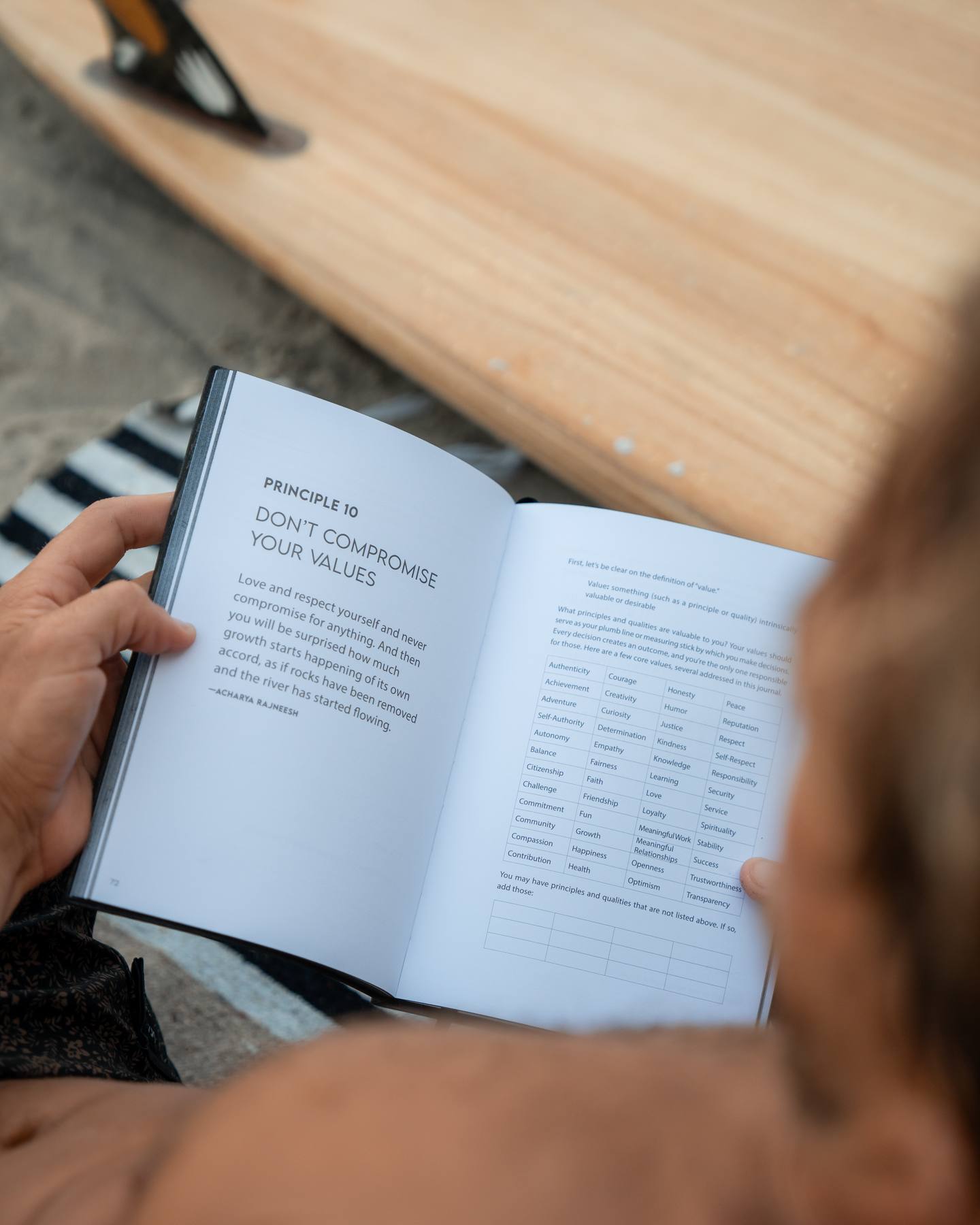
The Epic Journal is a 30 day guided journal built around 28 Principles of an Epic Life, with a morning intention and an evening reflection for each day. Its prompts draw on questioning techniques used in cognitive behavioral therapy, dialectical behavior therapy, and motivational interviewing, translated into plain language questions you ask yourself on paper. Every prompt comes with a worked example and a short note on why that question matters, which is the part most journals leave out.
It is a self guided wellness tool. It does not provide therapy and it is not a substitute for working with a licensed clinician. What it does is remove the blank page, so that on the evening you actually need to sort out a tangled thought, the structure is already waiting for you. If you want the wider argument for why that matters, we wrote about it in guided journal versus free writing, and about the pattern of quitting in why you keep quitting journaling.
What is a thought record in CBT?
A thought record is a structured writing exercise used in cognitive behavioral therapy that breaks one upsetting moment into six parts: the situation, the feeling and its intensity, the automatic thought, the evidence supporting that thought, the evidence against it, and a more balanced conclusion. It is also called a thought diary or thought log.
How long does a thought record take?
About ten minutes once you know the six steps. The first few take longer because you are learning the sequence, and it is normal for the evidence columns to feel awkward at first. It is not meant to be done for every passing bad mood, just the thoughts that keep circling.
Is a thought record the same as positive thinking?
No, and this is the most common misunderstanding. The goal is accuracy, not optimism. A properly done thought record sometimes confirms that your worry was well founded, which is useful, because a real problem you can name is easier to act on than a vague dread you cannot.
Do I need a therapist to do a thought record?
No, thought records are widely used as a self help exercise and you can do one in any notebook. That said, the technique is used inside therapy because a clinician notices what you skip and asks the follow up question you would not think to ask yourself. If you are working through something heavy, use this alongside professional help rather than instead of it.
What if writing a thought record makes me feel worse?
Stop, and treat that as real information rather than a failure of effort. Some material is not suited to working through alone on paper. If a thought involves harming yourself, contact the 988 Suicide and Crisis Lifeline or the Crisis Text Line rather than journaling about it.
Can I do a thought record in a guided journal?
Yes. A guided journal mainly removes the friction of setting up the structure each time, which is the usual reason people stop. The Epic Journal's prompts draw on questioning techniques used in cognitive behavioral therapy and related approaches, with a worked example on every prompt, though the technique itself is free and works in any notebook.