
Key takeaways
- In a Baylor University study led by Michael Scullin, five minutes spent writing tomorrow's to-do list helped participants fall asleep faster than writing about finished tasks.
- Specificity is the active ingredient. The more detailed the list, the faster people fell asleep.
- Venting is a daytime tool. Processing heavy emotions right before bed tends to wake the brain up, not settle it.
- Keep the evening practice to about five minutes, on paper, anchored to something you already do each night.
- If sleep trouble persists for weeks, see a clinician. Journaling supports a wind-down routine, it does not treat insomnia.
Does journaling before bed actually help you sleep?
Yes, and the best evidence comes from a sleep lab. In a Baylor University study led by sleep researcher Michael Scullin, participants spent five minutes writing before lights out, with their sleep measured objectively overnight rather than self-reported. One group wrote a specific to-do list covering tomorrow and the days ahead. The other group wrote about tasks they had already completed. The to-do list group fell asleep measurably faster, and the effect scaled with detail. The more specific the list, the sooner people drifted off.
That result flips the usual advice. Most of us assume a bedtime brain dump of feelings is the move. The data points somewhere simpler. Your brain is not keeping you awake because today went badly. It is keeping you awake because tomorrow is still open.
Why does a to-do list beat venting at night?
Because unfinished business is what your mind rehearses in the dark. Open loops, the call you have not made, the deadline you have not planned for, keep cycling until they land somewhere your brain trusts. Paper counts. Writing tomorrow down with real specifics tells your mind the plan exists and the rehearsal can stop. Researchers call this cognitive offloading. I call it closing the tabs.
Venting is a different tool. Expressive writing about difficult experiences has decades of research behind it, going back to James Pennebaker's work, and I walk through that evidence in does journaling actually work. But processing heavy material is activating, which is exactly what you do not want at 10:45 pm. Save the deep emotional work for daytime, and if you are working through something traumatic, do that writing alongside professional help, not instead of it.
What should you write before bed?
Keep it short, concrete, and pointed at tomorrow. These five prompts take about five minutes total:
- Tomorrow's top three. What are the three things that matter most tomorrow, and roughly when will I do each one?
- The loudest open loop. What is nagging me right now, and what is the very next physical step? Write the step, not the worry.
- One thing that went well today. A single line is enough. Emmons and McCullough's gratitude research found that a regular practice supports wellbeing, and I keep a full list of gratitude prompts here.
- What can wait. Which task am I allowed to ignore until next week? Naming it gives you permission to actually drop it.
- One thing to look forward to. End the day pointed at the part of tomorrow you want, not the part you dread.
How do you make night journaling stick?
Anchor it to something you already do every night. Brushing your teeth, setting the alarm, plugging in the phone. Pen and paper beat an app here, because the phone is the thing you are trying to put down. Keep the journal on the nightstand, cap the practice at five minutes, and let a missed night be a missed night, not a failure. I spent 13 years in addiction and recovery work before building a journal of my own, and the pattern I saw over and over was that evening routines collapse when they are vague or long. You can read that story on the about page, and there is a deeper playbook in how to start a journaling habit.
When does trouble sleeping deserve a clinician?
When it persists. If you have struggled to fall asleep or stay asleep most nights for several weeks, or daytime exhaustion is dragging down your work or your mood, talk to a doctor or a sleep specialist. Insomnia is common and treatable, and cognitive behavioral therapy for insomnia is a well-studied option your provider can point you toward. A journal is a wind-down tool that supports good sleep habits. It is not a treatment for a sleep disorder, and no honest company will tell you otherwise.
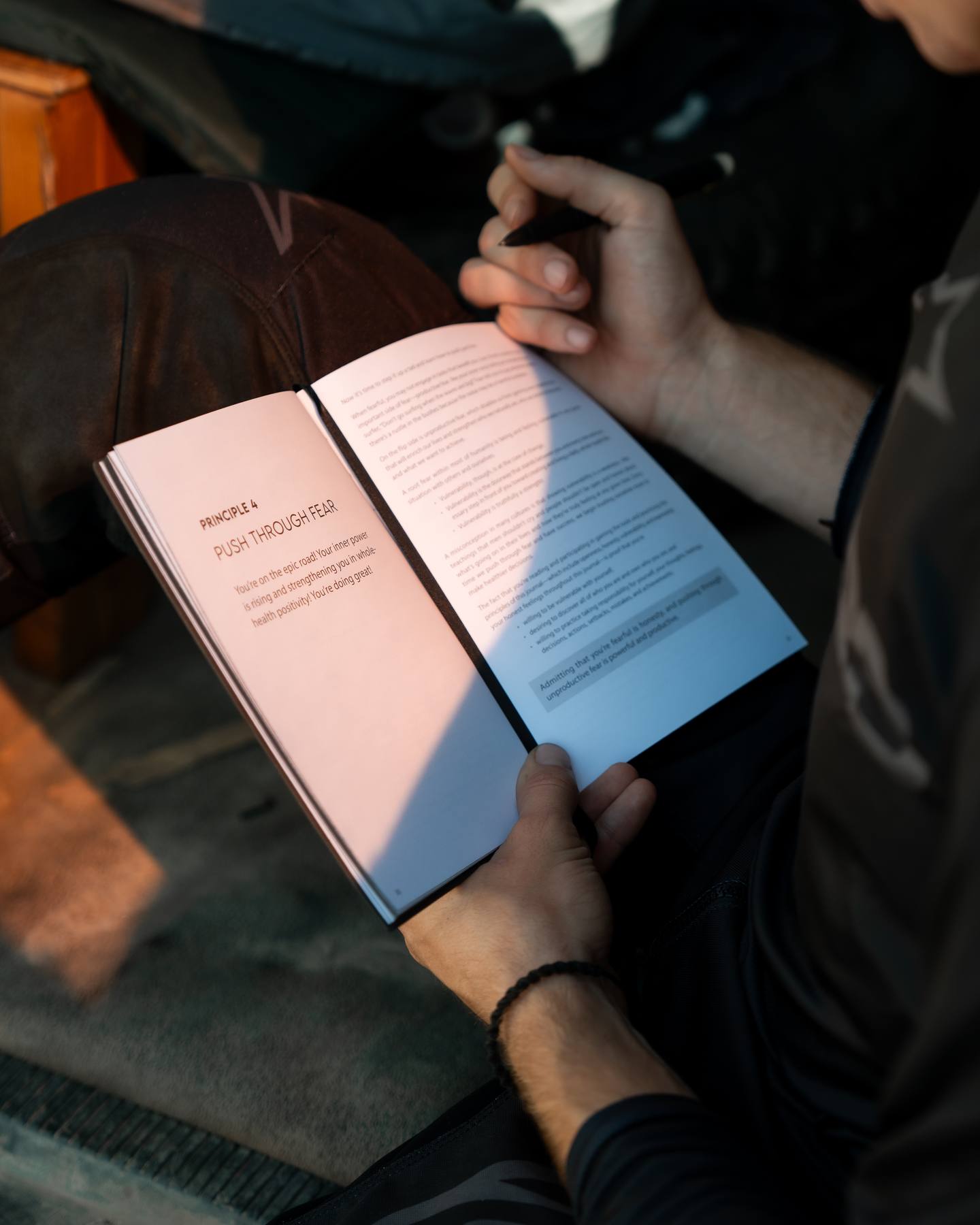
If you want the structure handled for you, that is why the evening pages exist in The Epic Journal. It is a 30-day guided journal with a morning and evening practice, built on a behavioral-health curriculum from an accredited program, with undated pages so a missed night never breaks the run. Write tomorrow down. Then go to sleep.
Is it better to journal in the morning or at night for sleep?
For sleep specifically, night wins, and the to-do list is the tool. The Baylor University study found that writing a specific list of tomorrow's tasks before bed helped people fall asleep faster. Morning journaling is better suited to setting intentions and reflecting with a clear head.
How long should I journal before bed?
About five minutes. That was the length used in the Baylor study, and it is enough time to write a specific to-do list without turning the practice into a second wind. Set a cap so the habit stays easy to repeat every night.
Should I write about my worries before bed?
Briefly, and only to convert each worry into a next step. Deep emotional processing tends to be activating, so save expressive writing for daytime. If worry or sleeplessness persists for weeks, bring it to a clinician and use journaling alongside professional help, not instead of it.