
Key takeaways
- Specific prompts beat repeating a generic three things list, which goes stale fast.
- Gratitude research, notably Emmons and McCullough, supports the practice for wellbeing.
- Writing about one thing in detail works better than listing five things quickly.
- Frequency can be lower than people assume, a few times a week is often enough.
- If it feels fake, the prompt is too broad, not the practice failing.
What are the best gratitude journal prompts?
The best gratitude prompts ask about something narrow and recent rather than something general. The reason is simple, a broad prompt lets your brain return a cached answer, while a narrow one forces you to actually go looking. Compare "what are you grateful for" with "who made your day easier this week and did they know it." Only one of those requires thinking.
Why do specific prompts work better than a list?
Listing three things works for about a week, then it becomes an act of retrieval instead of reflection. You write family, health, home, and the exercise stops touching anything. Specificity is what keeps it live, because a question you have not answered before cannot be answered on autopilot.
The research most people cite here is Emmons and McCullough, whose work on counting blessings found that people who kept a regular gratitude practice reported better wellbeing than comparison groups. What is worth noticing in that work is the emphasis on regular, considered reflection rather than rapid listing.
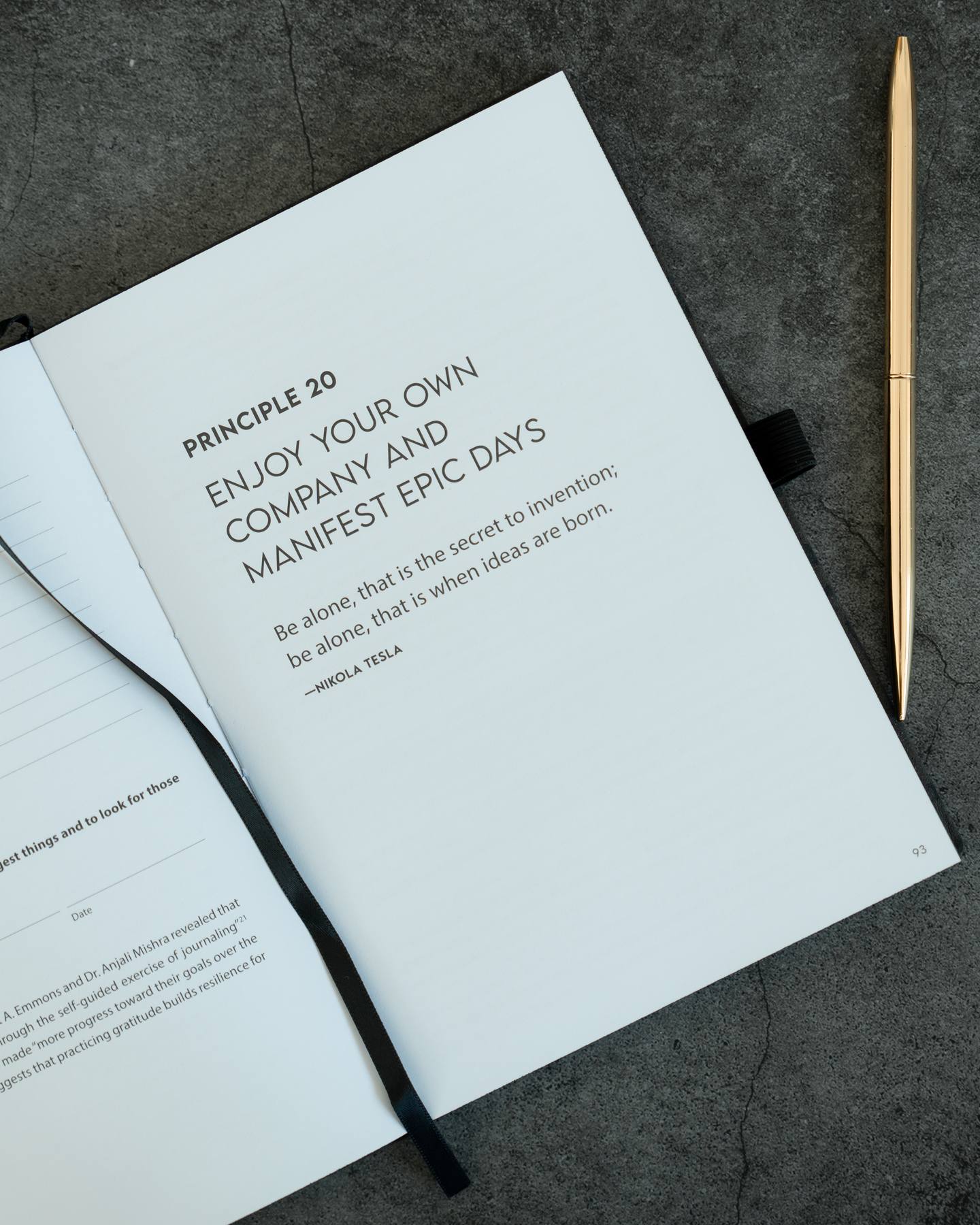
Thirty gratitude prompts to use right now
Answer one, not all thirty. Pick whichever one you cannot answer immediately, that is usually the one worth writing about.
People
- Who made your day easier this week without being asked?
- Who taught you something you still use?
- Which relationship is better this year than last year, and why?
- Who would notice first if you disappeared for a week?
- Who gave you honest feedback that you did not want to hear?
- Which stranger changed your day recently?
Ordinary things
- What part of your morning would you miss most if it vanished?
- What object do you use every day and never think about?
- What sound or smell reliably settles you?
- Which small comfort did you take for granted today?
- What is working in your body right now that you never notice?
- Where do you feel most like yourself?
Difficulty and setbacks
- What went wrong this year that you are now glad went wrong?
- What did a hard season give you that an easy one could not?
- Which door closing turned out to matter?
- What are you no longer afraid of?
- What did you survive that you rarely give yourself credit for?
- Who stayed when it would have been easier to leave?
Yourself
- What did you handle well today, even slightly?
- What have you gotten noticeably better at?
- Which decision from a year ago are you glad you made?
- What do you like about how you treat people?
- What did you say no to, and why was that right?
- What is one way you are different from who you were at twenty?
Right now
- What is one good thing that happened in the last three hours?
- What are you looking forward to this week?
- What would the version of you from five years ago be amazed by?
- What do you have right now that you once hoped for?
- What is going right that you have not acknowledged?
- If today repeated, what part would you want again?
How often should you write?
Less often than most people assume. Some gratitude research has found that writing a few times a week can work as well as daily, likely because daily repetition on a narrow topic wears the novelty out. If you already journal daily, treat gratitude as one component of the entry rather than the entire thing.
What if gratitude journaling feels fake?
That usually means the prompt is too broad, not that the practice is failing. It can also mean you are using gratitude to paper over something that needs to be dealt with directly, which does feel hollow, because it is. Gratitude works alongside honest reflection, not as a replacement for it.
This is why The Epic Journal pairs gratitude with intention in the morning and honest reflection at night, rather than making gratitude the whole exercise. It is a 30 day guided practice built on a behavioral health curriculum from an accredited program, structured so each day asks something specific. If you want the reasoning behind that structure, it is on our about page, and we compared the two approaches in guided journal versus free writing. For the research behind these prompts, including where the evidence is strong and where it is weaker, see does gratitude journaling actually work.
What should I write in a gratitude journal?
Write about one specific, recent thing in detail rather than listing several general ones. A narrow prompt, such as who made your day easier this week, produces more genuine reflection than a broad question you can answer on autopilot.
How often should you write in a gratitude journal?
A few times a week is often enough. Some gratitude research suggests writing less frequently can work as well as daily, because repeating a narrow exercise every day wears out its novelty.
Why does gratitude journaling feel fake sometimes?
Usually because the prompt is too broad and you are retrieving the same cached answers. It can also happen when gratitude is being used to avoid something that needs direct attention. Gratitude works alongside honest reflection, not instead of it.