
Key takeaways
- Robert Emmons and Michael McCullough's 2003 "counting blessings" studies found real wellbeing benefits from gratitude journaling across three separate samples, including college students and adults living with neuromuscular disease.
- Broader reviews since then, including a 2010 review by Alex Wood and colleagues and a 2016 meta-analysis led by Don Davis, found the effect on wellbeing is real but small, not the dramatic transformation some marketing implies.
- Effects shrink further in studies that compare gratitude writing to another active writing task instead of comparing it to doing nothing at all.
- Gratitude journaling's effect on depression and anxiety specifically is weaker and less consistent than its effect on general wellbeing.
- Specific, detailed reflection on one thing appears to work better than a fast, repeated list, and writing a few times a week can work about as well as daily.
- Gratitude journaling is a low cost, low risk practice with real evidence behind it, not a proven treatment for a diagnosed condition.
Gratitude journaling has real, peer reviewed research behind it, and it also gets oversold in casual conversation and marketing alike. Separating the two is the point of this piece.
Does gratitude journaling actually work?
Yes, in the sense that multiple controlled studies have found real wellbeing benefits from writing about what you are grateful for, and no, in the sense that the size of that benefit is smaller and more fragile than the most popular retellings suggest. Most gratitude journaling claims trace back to a single, well designed study from 2003. What usually gets left out of the summary is what happened when other researchers tried to build on it: real effects, but consistently smaller ones than the original headline implied.
What did Emmons and McCullough's original gratitude research actually find?
Across three separate studies, people who kept a gratitude journal reported more optimism, fewer physical complaints, and better overall wellbeing than those in the comparison conditions. Psychologists Robert Emmons, at the University of California, Davis, and Michael McCullough published these findings in "Counting Blessings Versus Burdens" in the Journal of Personality and Social Psychology in 2003, and it is still the study most gratitude journaling claims point back to. In two of the three studies, college students kept either a journal of things they were grateful for, a journal of daily hassles, or a neutral log of events, and the gratitude groups reported more optimism about the week ahead, fewer physical health complaints, and more time spent exercising than the hassles groups. The third study looked at adults living with neuromuscular disease and compared a gratitude journal against a comparison condition rather than a separate hassles arm; that gratitude group reported feeling more positive and more satisfied with life overall, plus some improvement in sleep. Those are real, published, peer reviewed findings that held up across three separate samples.
Did later research replicate those findings?
Partly. Broader reviews that followed found the underlying effect was real but smaller than the original studies suggested, once results were pooled across many labs instead of resting on one paper. A 2010 review by psychologists Alex Wood, Jeffrey Froh, and Adam Geraghty in Clinical Psychology Review found consistent evidence linking gratitude to wellbeing, but flagged that a lot of the intervention research relied on small samples, self reported outcomes, and comparison groups that did nothing at all rather than an equally structured alternative task. A 2016 meta-analysis led by Don Davis, published in the Journal of Counseling Psychology, pooled a large number of gratitude intervention studies and found the average effect on wellbeing was real but small, and it shrank further in the studies that compared gratitude writing against another active writing task instead of against doing nothing.
What does the research actually support, and what is weaker?
The strongest evidence supports a small, real boost to general wellbeing and life satisfaction, while the evidence for easing depression or anxiety specifically is thinner. Here is how the major outcomes researchers have studied break down.
| Outcome studied | What the research found | How solid is the evidence |
|---|---|---|
| General wellbeing and life satisfaction | Positive results from the original 2003 studies through later reviews and meta-analyses | Real effect, but small once pooled across many studies |
| Physical symptom reports | Fewer complaints in the gratitude groups in the original studies | Promising, but not tested as widely since as the wellbeing measures |
| Depression symptoms | Some reduction in gratitude writing groups compared to controls | Smaller and less consistent than the wellbeing effect |
| Anxiety symptoms | The weakest of the outcomes commonly studied | Least consistent evidence of the group |
| Gratitude writing vs. any structured reflective writing | A clear advantage over doing nothing, a much narrower one against an active comparison task | Depends heavily on what the comparison group actually did |
| Effects lasting beyond a few weeks | Rarely measured past the study period itself | Understudied, most trials ran a few weeks, not months |
Why do the effects look smaller in more careful studies?
The effects look smaller in more careful studies because a lot of the original comparison groups did nothing at all, and doing almost any structured, reflective writing exercise, not just a gratitude one, tends to help a little on its own. When researchers instead compare gratitude journaling to another equally structured writing task, such as writing about a neutral daily event, the gap between the two narrows. That does not mean gratitude journaling does nothing. It means part of what the early studies measured was the general benefit of a structured writing habit, and gratitude specifically explains a smaller slice of that than the popular version of the story suggests. Small sample sizes in a lot of the early gratitude literature are the other factor at work. A single study of a few dozen college students can produce an effect that looks impressive on its own and then shrinks once ten more studies try to find the same thing.
Does gratitude journaling help with depression or anxiety?
Only modestly, and less reliably than its effect on general wellbeing. Gratitude journaling is not shown to treat depression or anxiety as a diagnosed condition, and no honest reading of the research claims that it does. If you are managing depression, anxiety, or another diagnosed condition, gratitude journaling is worth trying alongside professional care, not instead of it.
What kind of gratitude journaling actually works, based on the research?
The version that holds up best is specific and detailed, not a fast, repeated list of the same three things. Emmons and McCullough's own studies asked people to write down particular things they were grateful for rather than vague categories, and the effect on wellbeing was strongest when the writing involved real reflection rather than quick recall. Writing a few times a week, instead of forcing a daily entry, also appears to work about as well for most people, likely because it gives the novelty of the exercise time to reset before it becomes automatic. For thirty specific prompts built around that idea, see our guide to gratitude journal prompts that do not feel fake.
Is gratitude journaling worth doing, given the mixed evidence?
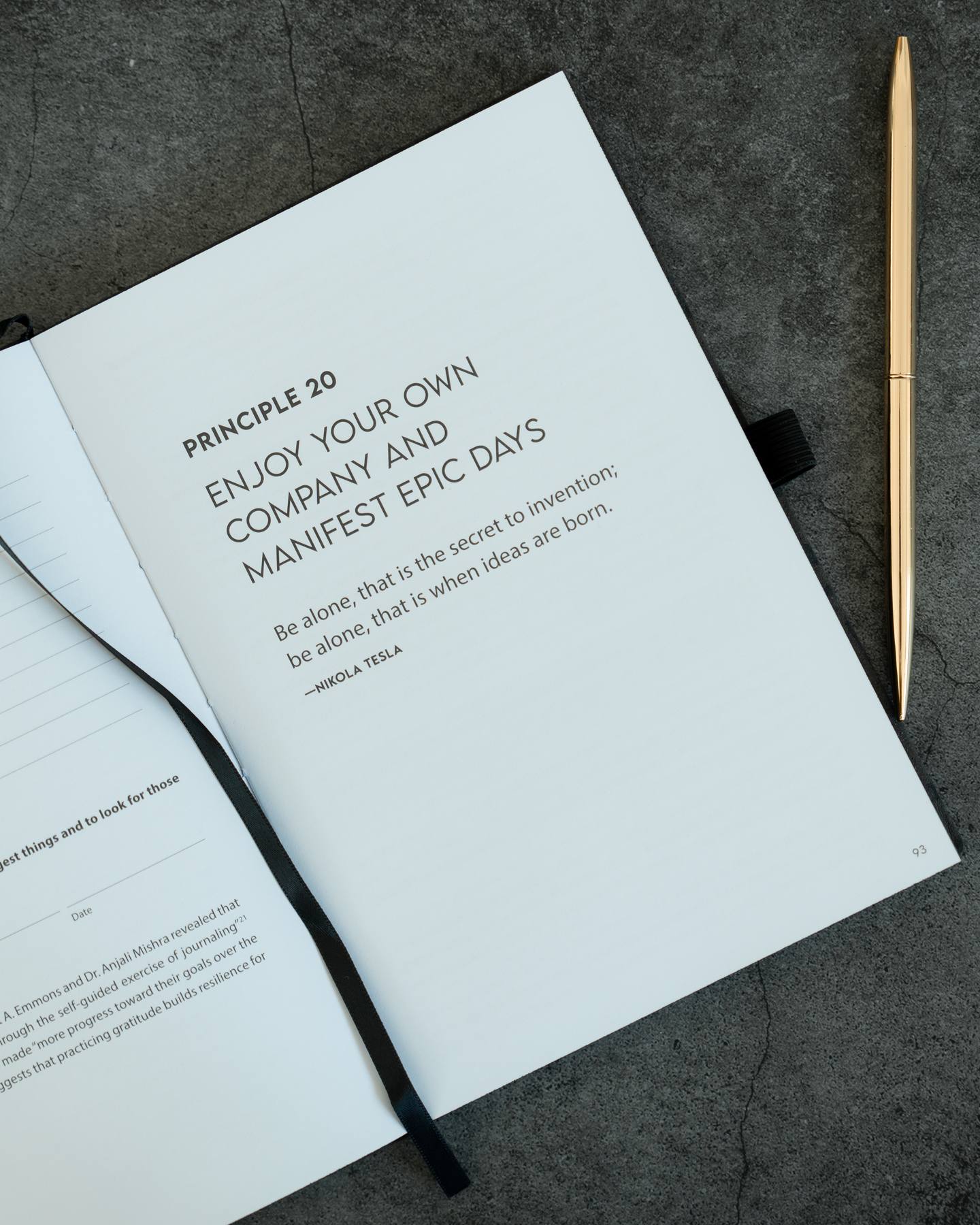
For most people, yes. It is a low cost, low risk practice with a real, if modest, evidence based upside, not a guaranteed fix for anything serious. The honest version of the pitch is that gratitude journaling is one small, well studied habit among many, not a replacement for sleep, movement, relationships, or professional care when something more serious is going on. The Epic Journal treats it that way already, as one part of a structured morning and evening practice rather than the entire exercise. That is a design choice on our part, not a claim that this specific format has been studied. For the same honest treatment of journaling in general, see does journaling actually work.
Is gratitude journaling scientifically proven?
It is supported by real, peer reviewed research, most notably Robert Emmons and Michael McCullough's 2003 studies, but "proven" overstates it. Later reviews and meta-analyses found the effect on wellbeing is real but small, and "proven" is a stronger word than the evidence supports for any single self-help practice.
Did later studies replicate Emmons and McCullough's original findings?
Partly. Broader reviews, including a 2010 review by Alex Wood and colleagues and a 2016 meta-analysis led by Don Davis, found the wellbeing benefit was real but consistently smaller once results were pooled across many studies, especially when gratitude writing was compared against another active writing task instead of doing nothing.
Does gratitude journaling help with depression or anxiety?
Only modestly, and less reliably than its effect on general wellbeing. Gratitude journaling is not shown to treat depression or anxiety as a diagnosed condition, and no honest reading of the research claims that it does. If you are managing depression, anxiety, or another diagnosed condition, gratitude journaling is worth trying alongside professional care, not instead of it.
How often do you need to write in a gratitude journal for it to work?
Less often than most people assume. Writing a few times a week, instead of forcing a daily entry, appears to work about as well for most people, likely because it gives the novelty of the exercise time to reset before it becomes automatic.
Is gratitude journaling worth doing if the effects are only modest?
For most people, yes. It is a low cost, low risk practice with a real, if modest, evidence based upside, not a guaranteed fix for anything serious.