Key takeaways
- Expressive writing research, led by psychologist James Pennebaker, is the most established evidence base.
- Benefits show up most consistently for emotional processing, reflection, and getting clarity on a stressor.
- Journaling is not shown to treat any diagnosed condition, and honest brands should not claim it does.
- Writing about something unresolved tends to help more than logging a neutral daily summary.
- Consistency beats length, five focused minutes outperforms an occasional long session.
Journaling gets talked about either as a miracle or as a diary for people with too much time. The research sits somewhere in between, and the useful details are in the caveats.
Does journaling actually work?
Yes, for specific things. The evidence most consistently supports journaling as a tool for emotional processing, reflection, and reducing the mental load of an unresolved problem. It is not a treatment, and the strongest claims you see online tend to be extrapolated well past what the studies measured.
What does the research actually measure?
Most of what people mean by journaling research is expressive writing research, a line of work started by psychologist James Pennebaker in the 1980s. The basic design asks people to write about a difficult or unresolved experience for roughly fifteen to twenty minutes across several consecutive days, then compares them to people who wrote about neutral topics. Pennebaker's early work found the writing group made fewer subsequent visits to the campus health center, a result that surprised people enough to launch decades of follow up studies.
Notice what that measures. It is a short, intense, time limited intervention about something specific and unresolved. It is not the same as keeping a diary, and the distinction matters when you read a headline.

What does journaling not do?
Journaling does not treat, cure, prevent, or diagnose anything, and the research does not claim it does. Follow up work on expressive writing has also produced mixed and smaller results than the earliest studies, which is normal for any effect studied at scale. Writing is a useful practice with modest, real benefits, not a clinical intervention.
There is one specific risk worth naming. Unstructured writing about distress can turn into rumination, where you rehearse the same painful loop without moving through it. That is part of why structured, prompted formats tend to hold up better for daily use, which we covered in guided journal versus free writing.
How long before it works?
Most people notice the immediate effect on the first or second entry, because naming a vague worry in concrete words makes it smaller almost instantly. The compounding benefit, seeing patterns across weeks, takes longer, usually a few weeks of near daily practice. Expressive writing studies typically ran three to four consecutive days, which is a useful reminder that this does not require months to be worth anything.
What kind of journaling has the most support?
Writing that engages with something real and unresolved outperforms logging what you ate. The research consistently points toward writing that involves reflection and meaning making rather than simple recording. Gratitude focused writing has its own separate evidence base, most notably the work of Emmons and McCullough, which we cover in our gratitude prompts guide.
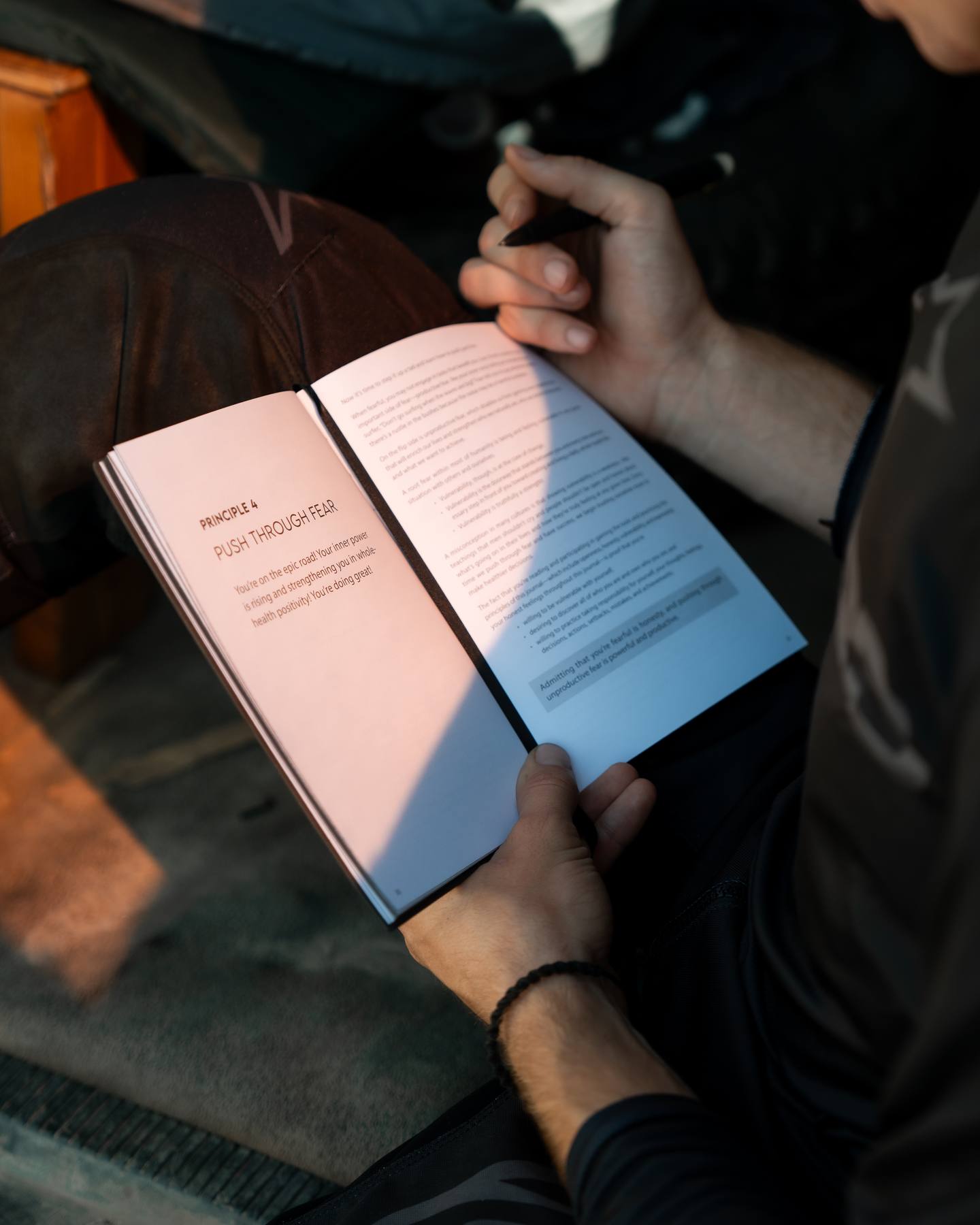
Practically, the format that survives is the one with a shape. The Epic Journal is a 30 day guided morning and evening practice built on a behavioral health curriculum from an accredited program, designed so each session is short enough to finish and specific enough to answer. It is a structured practice, not a treatment, and we are careful about that line. More about why we built it on our about page.
Is journaling scientifically proven?
Expressive writing has a real research base, most notably the work of psychologist James Pennebaker, showing benefits for emotional processing and reflection. It is not proven to treat any clinical condition, and later studies have found more modest effects than the earliest ones.
How long do you have to journal for it to help?
Many expressive writing studies used only three or four consecutive sessions. Day to day, most people notice an immediate effect from naming a worry concretely, while pattern recognition builds over a few weeks of near daily practice.
Is it better to journal every day or only when something is wrong?
Daily practice makes it available when you need it, because a habit you already have is easier to reach for on a hard day than one you have to start. The research on writing through a specific unresolved experience is strongest, but a daily rhythm is what gets you there.