
Key takeaways
- Morning journaling is for intention: you decide what matters before the day starts making demands.
- Evening journaling is for reflection: you process what happened and put the day down before sleep.
- Research supports both. Gratitude writing in the morning has Emmons and McCullough behind it, while expressive writing and pre-sleep to-do lists have Pennebaker and Scullin.
- If you can only do one, pick the session you will actually keep. Consistency beats timing every time.
- The Epic Journal is built as a 30-day morning and evening practice, so you never have to choose.
Is morning or evening journaling better?
Neither one wins outright, because they do different jobs. Morning journaling is proactive: you set intention before the day starts happening to you. Evening journaling is reflective: you close the loop on the day you actually had. Comparing them is like comparing a compass to a rearview mirror. You want both, and each takes about five minutes.
What is morning journaling actually for?
Morning journaling is for deciding what matters before your phone decides for you. A few written lines about your priority, your mindset, and what you are grateful for changes how you walk into the day. The gratitude piece has real research behind it. Robert Emmons and Michael McCullough found that people who regularly wrote about what they were grateful for reported better moods and more optimism than people who logged hassles or neutral events. Morning pages also benefit from timing. Nothing has gone wrong yet, so you are writing from possibility instead of damage control.
What is evening journaling actually for?
Evening journaling is for processing the day instead of carrying it to bed. James Pennebaker's expressive writing research showed that putting difficult experiences into words, rather than replaying them silently, is linked with real improvements in well-being. On genuinely heavy days, that kind of writing works alongside professional help, not instead of it. The evening session has a second job too: sleep. Michael Scullin's study at Baylor University found that people who spent a few minutes before bed writing a to-do list for tomorrow fell asleep faster than people who wrote about tasks they had already finished. Unloading tomorrow onto paper seems to quiet the mental rehearsal that keeps you staring at the ceiling.
How do the two sessions compare?
They split one practice into a forward half and a backward half. Neither is harder, and neither needs more than a few minutes.
| Morning session | Evening session | |
|---|---|---|
| The job | Set intention before the day starts | Reflect and close the loop |
| Direction | Forward: what will I do? | Backward: what did I do? |
| Best for | Focus, priorities, gratitude | Processing the day and winding down |
| Research anchor | Gratitude writing (Emmons and McCullough) | Expressive writing (Pennebaker) and pre-sleep to-do lists (Scullin) |
| Fails when | You skip it and let the day decide for you | You aim too long and fall asleep mid-sentence |
What are good morning journaling prompts?
Good morning prompts point forward. Try these three:
- What is the one thing that would make today a win?
- What am I grateful for this morning, and why that thing specifically?
- Where will today test me, and how do I want to respond when it does?
If the gratitude prompt clicks for you, we wrote a full set of gratitude prompts that do not feel fake.
What are good evening journaling prompts?
Good evening prompts look backward, then let go. Try these three:
- What actually happened today, and how do I honestly feel about it?
- What did I do today that my future self will thank me for?
- What is unfinished, and what am I allowed to set down until tomorrow?
That last one is the Scullin finding in prompt form. Write tomorrow's list tonight and let the paper hold it so your head does not have to.
What if you only have time for one session?
Pick the session you will actually keep, because consistency beats timing every time. If your mornings are chaos, journal at night. If you are asleep by nine, write with your coffee. The habit matters more than the hour, and the fastest way to build it is to lower the bar, which we cover in how to start a journaling habit that actually sticks. Once one session feels automatic, adding the other is easy, because the morning entry gives the evening entry something to answer.
How does The Epic Journal handle morning and evening?
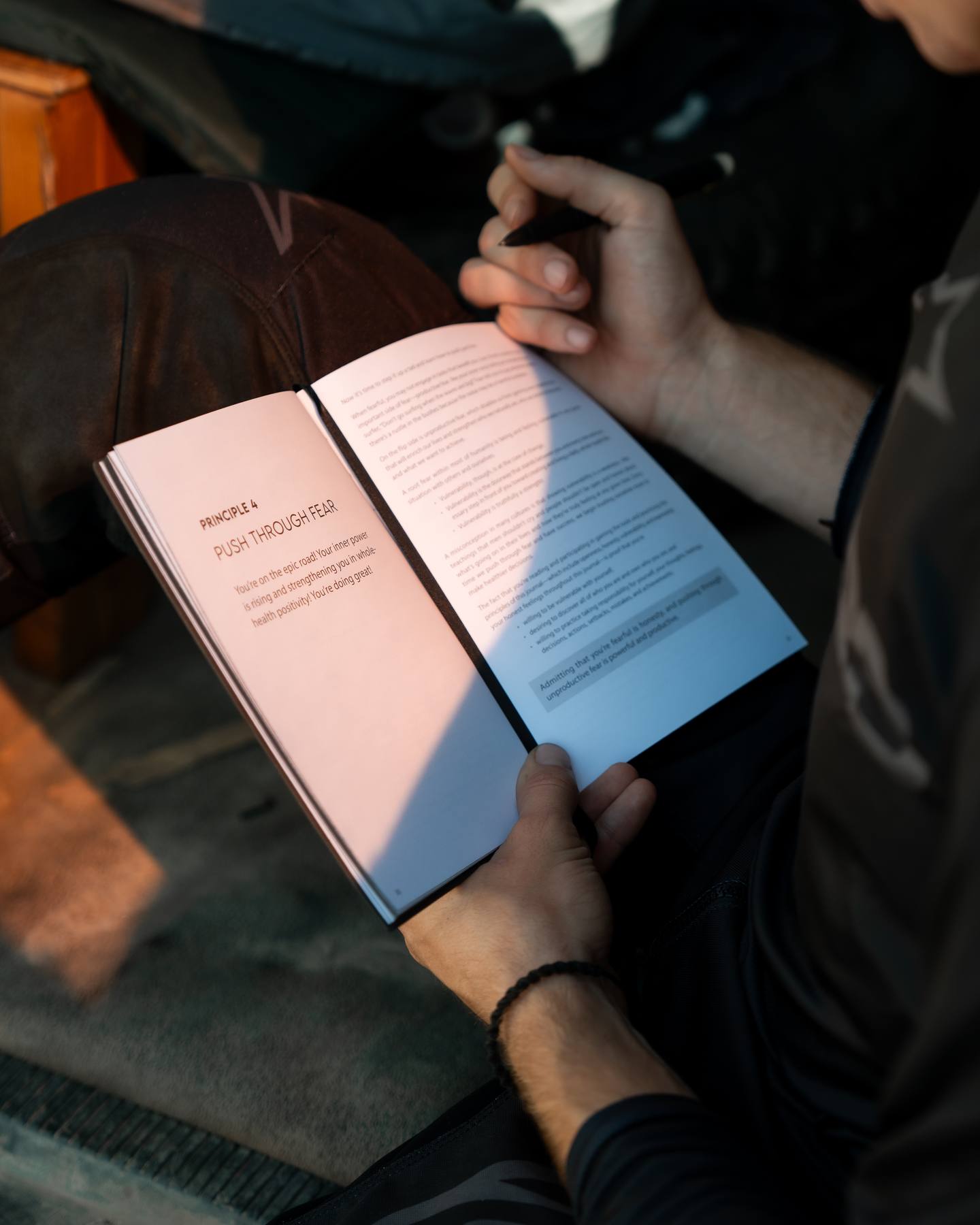
It is built as both, on purpose. The Epic Journal is a 30-day guided journal with a morning entry and an evening entry for every day, organized around 28 Principles of an Epic Life and built on a behavioral-health curriculum from an accredited program. The pages are undated, so a missed evening never breaks the streak. Founder Preston Durnford spent 13 years in addiction and recovery work, where he saw morning intention and evening reflection hold people steady through hard seasons. His story is here. Rated 4.6 of 5 by verified buyers. If you want the morning-versus-evening question answered for you, the journal settles it the same way this post does: both.
Is it better to journal in the morning or at night?
Both, for different reasons. Morning journaling helps you set intention and priorities before the day starts. Evening journaling helps you reflect, process, and unload before sleep. If you only have time for one, choose the session you can do consistently.
How long should a morning or evening journaling session take?
Five to ten minutes is plenty for either session. A short practice you keep beats a long one you abandon. The Epic Journal is built around one guided morning entry and one guided evening entry per day across its 30 days, so each sitting stays brief.
Does journaling before bed help you sleep?
Research by Michael Scullin at Baylor University found that people who wrote a to-do list for the next day before bed fell asleep faster than people who wrote about tasks they had already completed. Offloading unfinished business onto paper appears to quiet the mental rehearsal that keeps people awake. It supports winding down, though it is not a treatment for sleep problems.