
Key takeaways
- The best recovery gifts support daily comfort, ritual, or connection, not a single dramatic gesture.
- Avoid anything alcohol-adjacent, wine-filled chocolates, bar glassware, liquor store or brewery gift cards, even as a joke.
- Skip "here's to new beginnings" drinkware and toast-themed gifts; the ritual they reference can be as loaded as the alcohol itself.
- Never turn a gift into a surprise public disclosure of someone's sobriety. Give it privately and let them decide who knows.
- Experience gifts, a hike, a class, a concert at a venue that isn't bar-centered, build new memories outside old using contexts.
- A specific, guided journal works better as a gift than a blank one because it removes the blank-page problem on hard days.
Most gift guides for people in recovery repeat the same handful of items in a different order, then bury a vague warning about alcohol at the bottom. That is not enough. The wrong gift can genuinely put someone in a difficult spot, and the right one can fold into a day that is already hard work. Here is what actually helps, what to leave off the list, and why the difference is bigger than it looks.
What Makes a Gift Good for Someone in Recovery?
A good recovery gift supports a routine, a comfort, or a connection, not a single dramatic gesture. Recovery is not one moment you can honor with the right present. It is thousands of ordinary hours: mornings, commutes, evenings, meetings, the drive home. The gifts that land best fold into those hours instead of standing outside them demanding a reaction. That usually means something the person can use privately if they want to, without having to explain their sobriety to anyone who asks about it.
It also means resisting the urge to make the gift entirely about the addiction. A person in recovery is still a whole person with the same tastes, humor, and interests they had before, plus whatever new ones they have picked up. A gift that treats them only as "someone in recovery" and nothing else tends to land as pity rather than support, even when that is not the intention.
What Should You Avoid Gifting Someone in Recovery?
Avoid anything that references alcohol or drug use, jokes about the addiction itself, or forces a disclosure the person has not agreed to make. This is the section that matters most, and it is worth being specific rather than vague about it.
Skip alcohol-adjacent items even when alcohol itself is not involved: wine-filled chocolates, boozy-scented candles, cocktail shaker sets, bar glassware, a "beer of the month" club. The reference is the problem, not just the substance. The same goes for gift cards to liquor stores, breweries, wineries, or bars, and for gift cards to restaurants where the bar is clearly the main draw.
Be careful with "here's to new beginnings" style drinkware and toast-themed gifts too, even the alcohol-free versions. A mug or flask engraved with a cheers line borrows the whole ritual of drinking, the clink, the toast, the celebratory pour, and that ritual can be as loaded as the liquid itself. The same caution applies to anything tied to their old using context: a gift referencing a specific bar, a festival, or a friend group connected to their past use, unless they have explicitly told you that place or group is fine now.
Joke gifts about the addiction or the sobriety itself are a hard no. "Recovering alcoholic" mugs, gag AA-chip novelty items, anything that turns the hardest thing they have ever done into a bit, tend to land as a small cruelty even when meant affectionately. On the other end, overly simplistic gifts like a basic adult coloring book or a plaque that just says "you can do it" can land almost as badly, because they treat someone doing serious, deliberate work as fragile rather than capable.
Do not buy a sobriety chip or coin yourself, even with good intentions. Those typically come from within a person's own program or from a sponsor, and they carry meaning tied to that specific structure. A piece of jewelry engraved with a meaningful date can do something similar without stepping into territory that belongs to their program.
Last, never turn a gift into a surprise disclosure. Presenting something in front of a group, especially with a toast or a speech about "how proud we all are," can out someone's sobriety to coworkers, extended family, or acquaintances who were never told and were never asked whether they wanted to know. Recovery status is private information. Give the gift privately, or ask first if a group setting is unavoidable.
| Instead of this | Give this instead |
|---|---|
| Wine-filled chocolates or a bar cart accessory | A real pour-over or espresso setup, or a proper tea sampler |
| Gift card to a liquor store, brewery, or bar | Gift card to a bookstore, sporting goods store, or a restaurant that is not bar-centered |
| "Here's to new beginnings" toast-themed drinkware | A weighted blanket, a guided journal, or a personalized keepsake tied to a real memory |
| A joke gift about the addiction or sobriety | A specific gift tied to something they actually love |
| A surprise gift announced in front of people who don't know | The same gift, given privately, with no commentary attached |
| An "inspirational" plaque or a basic coloring book | A real hobby kit, class, or tool that respects the work they're doing |
What Are the Best Comfort and Self-Care Gifts for Recovery?
The best comfort and self-care gifts for recovery include a weighted blanket, a good eye mask, a real pillow upgrade, a proper coffee or tea setup, and noise-canceling headphones. Early recovery is often physically exhausting on the nervous system, and anything that makes rest or self-soothing easier is genuinely useful, not just nice.
Sleep is often disrupted during this period, which is one reason sleep-focused items like these can noticeably change how someone rests at night. A proper coffee setup, a pour-over kit or a small espresso machine, is worth calling out specifically. Coffee often becomes the ritual that used to belong to a drink: something warm, made with a little ceremony, at the same time every day. A herbal tea sampler does the same job at a lower price point. A soft robe, a heating pad, and unscented or lightly scented bath products round out this category, and all of them work across a wide range of budgets.
What Are Good Ritual and Routine Gifts for Someone in Recovery?
Good ritual and routine gifts include a sunrise alarm clock or a light therapy lamp, a meditation cushion, a subscription to a meditation or mindfulness app, a simple weekly planner built around small daily wins, and a guided journal. Recovery tends to be rebuilt through small, repeated structures rather than big gestures, and a morning and evening routine, even a five-minute one, gives a day shape on the hours when shape is hardest to find on your own.
A "meeting bag," a decent tote stocked with a notebook, mints, and a water bottle, is a small but genuinely practical gift for someone who goes to meetings regularly. A guided journal belongs in this category too, and it is worth its own section below because not all journals do the same job.
What Experience Gifts Work Well for Someone in Recovery?
The best experience gifts build new memories somewhere unconnected to the old using life: a day hike, a state or national park pass, tickets to a concert or comedy show at a venue that is not built around a bar, a cooking class, a pottery class, or a massage. Building those new memories in a different kind of setting matters more than most people realize.
Think about whether the person would prefer a group activity or a solo one before you book anything. A group class can help someone rebuild social confidence in a low-pressure setting, while a solo experience, a hike, a spa day, a museum membership, gives quiet space without the social calculation that group settings can require. When in doubt, ask what sounds appealing rather than guessing.
What Are Thoughtful Creative and Practical Gifts for Recovery?
Good creative gifts include art supplies, a sketchbook, a camera, a beginner instrument with a few lessons attached, a model-making kit, or a small garden and plant-starter kit, especially anything that connects to something the person has mentioned wanting to try. They give someone a place to put restless energy that used to go somewhere else.
Practical gifts matter too, and they do not need to be exciting to be good. A quality daily planner, a daypack for the hikes and day trips already on their calendar, real running shoes, a knife roll for the cooking class they mentioned wanting to try, or a subscription meal kit all support the unglamorous logistics of a stable routine. None of these need to say anything about recovery at all, and that is fine. Not every gift has to carry meaning about the addiction to be meaningful.
Is a Guided Journal a Good Gift for Someone in Recovery?
Yes, when it is specific enough to actually use, not another blank notebook that ends up in a drawer. Journaling gives someone a place to name what happened, what triggered it, and what helped, which is useful groundwork for the reflective work recovery asks for. The problem with a blank notebook is that it hands someone one more decision to make on a day when decisions are already exhausting: what to write, how to start, whether today even counts.
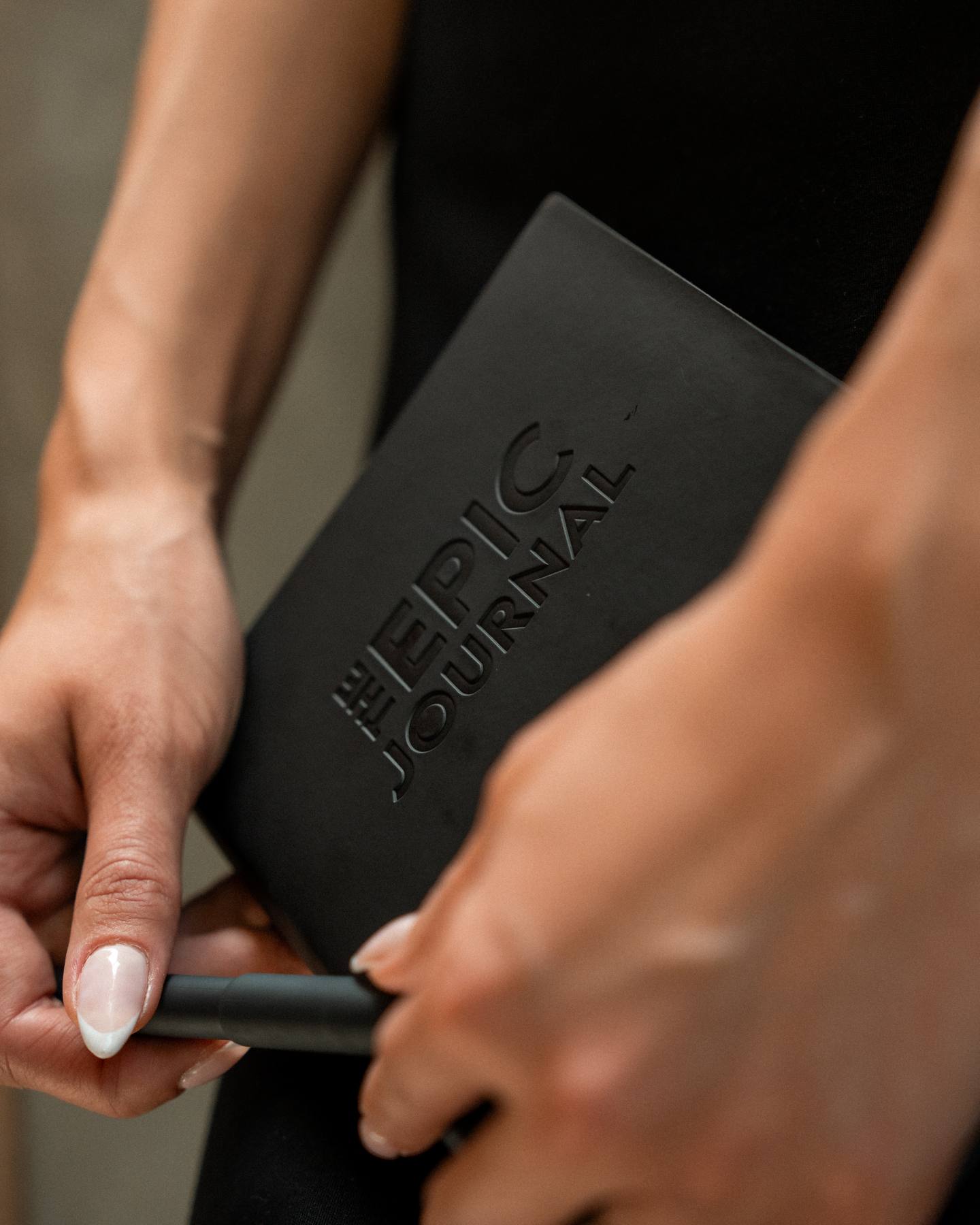
This is where a structured option like The Epic Journal fits as one strong choice among several. It is a 30-day guided morning and evening practice across 279 undated pages, built on a behavioral health curriculum from an accredited program. To be precise about that claim, it is the program that holds the accreditation, not the journal or the curriculum itself, and the journal is a self-guided wellness tool rather than treatment. Undated pages matter here specifically as a gift: missing a few days is normal, and a journal that does not punish that with a blank dated page is easier to pick back up. We go deeper on what to look for in one in this guide to choosing a guided journal for recovery.
A journal, guided or otherwise, works best as one part of a fuller picture. It supports the daily reflective work that sits alongside professional help, a sponsor, or a program, not instead of any of them, and it is worth giving in that spirit: as a useful tool, not a solution.
How Should You Present a Recovery Gift?
Present it the same way you would present any other gift: without a speech about their sobriety, without narrating what the gift is supposed to mean, and without expecting a particular reaction. Let them decide how much weight to put on it.
If you are unsure whether a card or a comment referencing their recovery is welcome, leave it out and let the gift speak for itself. If you want to say something meaningful, say it privately rather than in front of a group, and keep it about them as a person rather than about the addiction specifically. The goal of a good recovery gift is to say I see you, not I am watching your recovery.
If the gift you are picking is for a specific milestone rather than a general show of support, see our narrower guide to 1-year sober gift ideas that actually mean something.
What is a good gift for someone in early recovery?
Focus on comfort and routine rather than a single big gesture: a weighted blanket, a real coffee or tea setup, noise-canceling headphones, or a guided journal all support the daily structure that early recovery depends on. Avoid anything that references alcohol, jokes about the addiction, or requires them to explain their sobriety to use it.
Should I get someone in recovery a sobriety chip or coin?
Generally, no, even with good intentions. Sobriety chips and coins are traditionally given within a person's own 12-step program or by a sponsor, and they carry meaning tied to that specific structure. A piece of jewelry engraved with a meaningful date can mark the same milestone without stepping into territory that belongs to their program.
Is a gift card an okay gift for someone in recovery?
Yes, as long as it is not for a liquor store, brewery, winery, or a restaurant where the bar is the main draw. Gift cards to a bookstore, a sporting goods store, a coffee shop, or a restaurant that is not bar-centered work well and give the person freedom to choose.
What if I'm not sure whether they'd want a recovery-themed gift?
Default to a normal, thoughtful gift tied to their actual interests rather than one that references their sobriety directly, unless they have specifically signaled they want that kind of acknowledgment. Most people in recovery want to be treated as a whole person, not primarily as someone in recovery.
Is a journal a good gift for someone in recovery?
Yes, if it is a guided journal with specific, structured prompts rather than a blank notebook. A blank page adds one more decision on a day that already has too many. A structured option like The Epic Journal gives a short morning and evening practice with undated pages, so missing a few days does not turn into visible failure.
How do I give a recovery-related gift without embarrassing them?
Give it privately rather than in front of a group, skip any speech about how proud you are of their sobriety, and let them decide what to say or share. A gift that forces a public acknowledgment of someone's recovery status can put them in an uncomfortable or even unsafe position with people who were never told.