
Key takeaways
- Look for short daily structure, specific prompts, undated pages, and a real clinical foundation.
- Undated pages matter more than almost anything else, because missing days is normal and dated pages turn a gap into failure.
- Prompted journaling is generally easier to sustain in early recovery than an open blank page.
- A journal is a support tool. It does not replace treatment, a sponsor, a clinician, or a program.
- The Epic Journal is built on a behavioral health curriculum from an accredited program.
Most journal buying guides in this space are affiliate lists. This one is about what actually holds up when someone is doing the work, which is a different question.
What makes a guided journal good for recovery?
A guided journal works in recovery when it lowers the effort required on the worst day, not the best one. Anyone can journal on a good morning. The journal that matters is the one you can still complete when you are exhausted, ashamed, or white knuckling it, and that means short entries, concrete prompts, and no pressure to perform.
Why does structure matter more in early recovery?
Early recovery already asks you to make an enormous number of decisions, so a blank page adds one more. Structure removes the question of what to write and leaves only the answering, which is the part that actually helps. It also keeps writing from drifting into rumination, where you circle the same distress without moving through it.
What should you look for in one?
Judge a recovery journal on whether it survives contact with a hard week. These are the features that decide that.
| Look for | Why it matters in recovery |
|---|---|
| Undated pages | Missing three days is normal. Dated pages turn a normal gap into visible failure and people quit. |
| Short daily entries | Five minutes is completable on a bad day. Three blank pages is not. |
| Specific prompts | Removes the blank page problem entirely, which is where most habits die. |
| Morning and evening rhythm | Bookends the day, which is when cravings and rumination tend to spike. |
| A real clinical foundation | Separates a considered curriculum from a designer notebook with quotes in it. |
| Durable binding | It gets carried, packed, and reopened daily for a month or more. |
Is a journal enough on its own?
No, and this is worth saying plainly. A journal is a support tool. It does not replace treatment, a clinician, a sponsor, a program, or medication when that is part of your plan. Anyone selling a notebook as a recovery solution is overselling it. What a journal does is hold the daily reflective work that sits between everything else, which is real but partial. We went deeper on that boundary in is journaling as effective as therapy.
Where does The Epic Journal fit?
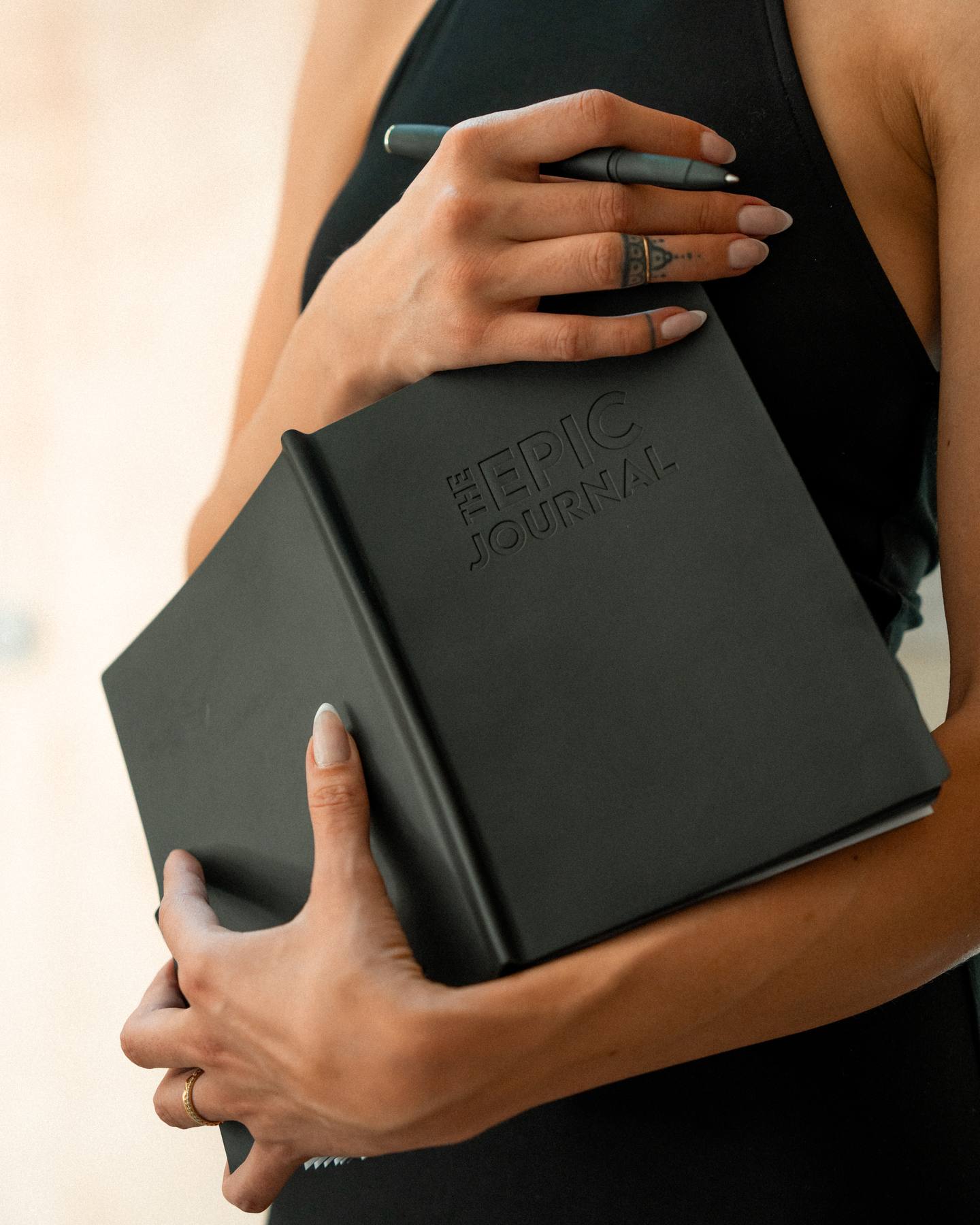
The Epic Journal was built against this list on purpose. It is a 30 day guided morning and evening practice across 279 undated A5 pages, built on a behavioral health curriculum from an accredited program. To be precise about that claim, the program holds the accreditation, not the journal, and the journal is not licensed treatment.
The reason it is shaped this way is that our founder, Preston Durnford, spent 13 years in addiction and recovery and lost his father to suicide and his brother to a fentanyl overdose. He built the structure he needed, then tested it for three years before it became a product. That story is on our about page. If you are choosing between options, choose the one you can still open on the day you least want to.
If you are shopping for a specific milestone rather than choosing a journal for daily use, see our guide to 1-year sober gift ideas that actually mean something.
What should I write in a recovery journal?
Start with what is concrete: what happened today, what set you off, what helped, and one thing you are doing tomorrow. Specific prompts work better than open reflection, especially early on, because they are answerable when you are tired or overwhelmed.
Do treatment programs actually use journals?
Yes. Structured journaling is a standard part of many accredited behavioral health program curricula, usually assigned alongside individual and group therapy for tracking mood, naming triggers, and building relapse prevention skills.
Is a guided journal better than a blank notebook for recovery?
For most people, yes. A blank notebook asks you to invent a format every day, which is the point where the habit usually dies. A guided journal supplies the prompt so the only thing left is answering it.