
Key takeaways
- Cognitive distortions are a well-documented CBT concept, first named by psychiatrist Aaron Beck, not a diagnosis or a personality flaw.
- The 12 most common distortions include all-or-nothing thinking, catastrophizing, mind reading, fortune telling, should statements, and seven more below.
- Every distortion in the table gets a plain-English definition plus one non-diagnostic question for noticing it in the moment.
- Mind reading and fortune telling usually travel together: an assumed thought about someone else leads straight into a predicted bad outcome.
- Recognizing several of these patterns in your own thinking this week is normal. It does not mean something is wrong with you.
- A journal can create a small pause between an automatic thought and your reaction to it, using the same question-based approach.
Cognitive distortions are not a diagnosis and they are not a personality flaw. They are a documented category of thinking pattern that psychiatrist Aaron Beck named while studying depression in the 1960s, and every person's mind produces some version of them under stress. Learning the list is less about fixing something broken and more about recognizing a pattern you already do, so you can ask a better question the next time it shows up.
What are cognitive distortions?
Cognitive distortions are habitual, biased ways of interpreting a situation that make it seem worse, more certain, or more personal than the evidence actually supports. The term comes from cognitive behavioral therapy (CBT), where it describes the gap between what actually happened and the harsher story the mind tells about it. Everyone has automatic thoughts like this. A distortion is simply a recognizable shape those thoughts tend to take, like "if one thing went wrong, everything is ruined" or "I know exactly what they're thinking of me." Naming the shape is the first step to questioning it instead of believing it automatically.
Where does this list of 12 cognitive distortions come from?
The list traces back to psychiatrist Aaron Beck, who identified several of these patterns in the 1960s and expanded them in his 1979 book, "Cognitive Therapy of Depression," co-written with A. John Rush, Brian Shaw, and Gary Emery. Beck's student David Burns later translated the clinical language into the plain-English version most people recognize today in his bestselling book, "Feeling Good," adding a few distortions of his own and giving the list the accessible names it's known by now, like "should statements" and "emotional reasoning." Between Beck's original clinical framework and Burns's popular version, this vocabulary has been taught in CBT training programs and reprinted in patient handouts for more than four decades. It is one of the most widely cited frameworks in cognitive therapy, not a proprietary system belonging to any single book, app, or journal. Burns himself grouped these into ten forms of twisted thinking in "Feeling Good," pairing mind reading with fortune telling under one heading, "jumping to conclusions," and treating catastrophizing as the extreme end of magnification rather than a separate item. This piece splits those pairs into their own rows and organizes the set into 12 entries below, a choice made for scanning and clarity, not a different count that Beck or Burns themselves used.
What are the 12 most common cognitive distortions?
The 12 most commonly taught cognitive distortions are all-or-nothing thinking, catastrophizing, mind reading, fortune telling, should statements, labeling, overgeneralization, personalization, mental filter, discounting the positive, emotional reasoning, and magnification or minimization. Each one describes a different shortcut the mind takes, but they share the same job: turning an ordinary, uncertain moment into something that feels like a fact. The table below gives each one in plain English, along with a simple, non-diagnostic question you can ask yourself to notice it in the moment.
| Distortion | What it means | A question for noticing it |
|---|---|---|
| All-or-nothing thinking | Seeing a situation in only two categories, like perfect or failure, with no middle ground. | Is there a version of this that's partly true, not all or nothing? |
| Catastrophizing | Assuming the worst possible outcome, the extreme form of magnification, and reacting as though it's already happening. | What's the most likely outcome, not just the worst one? |
| Mind reading | Assuming you know what someone else is thinking, usually something critical, without them saying so. | What did they actually say, separate from what I'm assuming they meant? |
| Fortune telling | Predicting a negative future as if it were already decided, before anything has happened. | Am I treating a guess about the future as if it's already a fact? |
| Should statements | Judging yourself or others against a rigid rule about how things "should" or "must" be. | Would I hold someone else to this same "should"? |
| Labeling | Reducing yourself or someone else to a single global label based on one moment. | Am I describing what happened, or naming who I am because of it? |
| Overgeneralization | Taking one event and treating it as proof of a permanent, repeating pattern. | Is "always" or "never" actually true here, or true just this once? |
| Personalization | Taking the blame for something that wasn't fully, or even mostly, within your control. | What part of this was actually mine, and what part wasn't? |
| Mental filter | Zeroing in on one negative detail until it colors the whole picture. | What am I leaving out of this picture right now? |
| Discounting the positive | Dismissing something good as not counting, an accident, or too small to matter. | Would I let a friend wave this off the same way I just did? |
| Emotional reasoning | Treating a strong feeling as proof of fact, as in "I feel it, so it must be true." | Is this a feeling I'm having, or a fact I've confirmed? |
| Magnification / minimization | Blowing up a flaw or setback while shrinking a strength or win down to nothing. | Am I sizing this up to match what actually happened? |
How is mind reading different from fortune telling?
Mind reading is about the present moment, assuming you already know what someone else is thinking, while fortune telling is about the future, assuming you already know how something will turn out. They often show up together in the same spiral: "she thinks this project is weak" is mind reading, and "so I'm going to get passed over for the next one" is the fortune telling that follows right behind it. Both borrow the same shortcut, treating a guess as if it were confirmed information, which is exactly what the noticing questions in the table above are built to interrupt.
What does noticing a distortion actually look like in real life?
Noticing a distortion looks like pausing on a thought mid-sentence and asking one honest question about it, not analyzing your whole personality. Here's a small, ordinary example. A founder sends a proposal to an investor on Tuesday and hears nothing back by Thursday. The automatic thought shows up fast: "They hated it. I'm not going to raise this round." That's fortune telling layered on top of mind reading, a prediction about the future built on an assumed read of someone else's silence. Written out in a journal, that noticing question gives you something concrete to answer: "Am I treating a guess about the future as if it's already a fact?" The honest answer is usually yes, followed by a more accurate one: a lot of people take a week to reply to a proposal, and silence by Thursday is not the same as an answer. The thought doesn't have to be argued away or suppressed. It just has to be seen clearly enough to lose its grip for a minute.
Does noticing a cognitive distortion mean something is wrong with you?
No, noticing a cognitive distortion does not mean something is wrong with you, it means your mind is doing what every mind does under stress, pressure, or uncertainty. Beck first documented these patterns in people who were depressed, but decades of everyday clinical and non-clinical use have made clear that all-or-nothing thinking, catastrophizing, and the rest show up in ordinary people on ordinary days, not just in a clinical population. This list is a naming tool, not a checklist for self-diagnosis. If you read through the table above and recognize six or seven of them in your own thinking this week, that makes you a person with a brain, not a person with a disorder. The one exception worth naming clearly: if what you're noticing feels heavier than everyday stress, like it's affecting your safety or your ability to function, that's a conversation for a therapist or doctor, and if it's urgent, the 988 Suicide and Crisis Lifeline (call or text 988) and the Crisis Text Line (text HOME to 741741) are built for exactly that, not a journal or a blog post.
How can a journal help you notice these patterns?
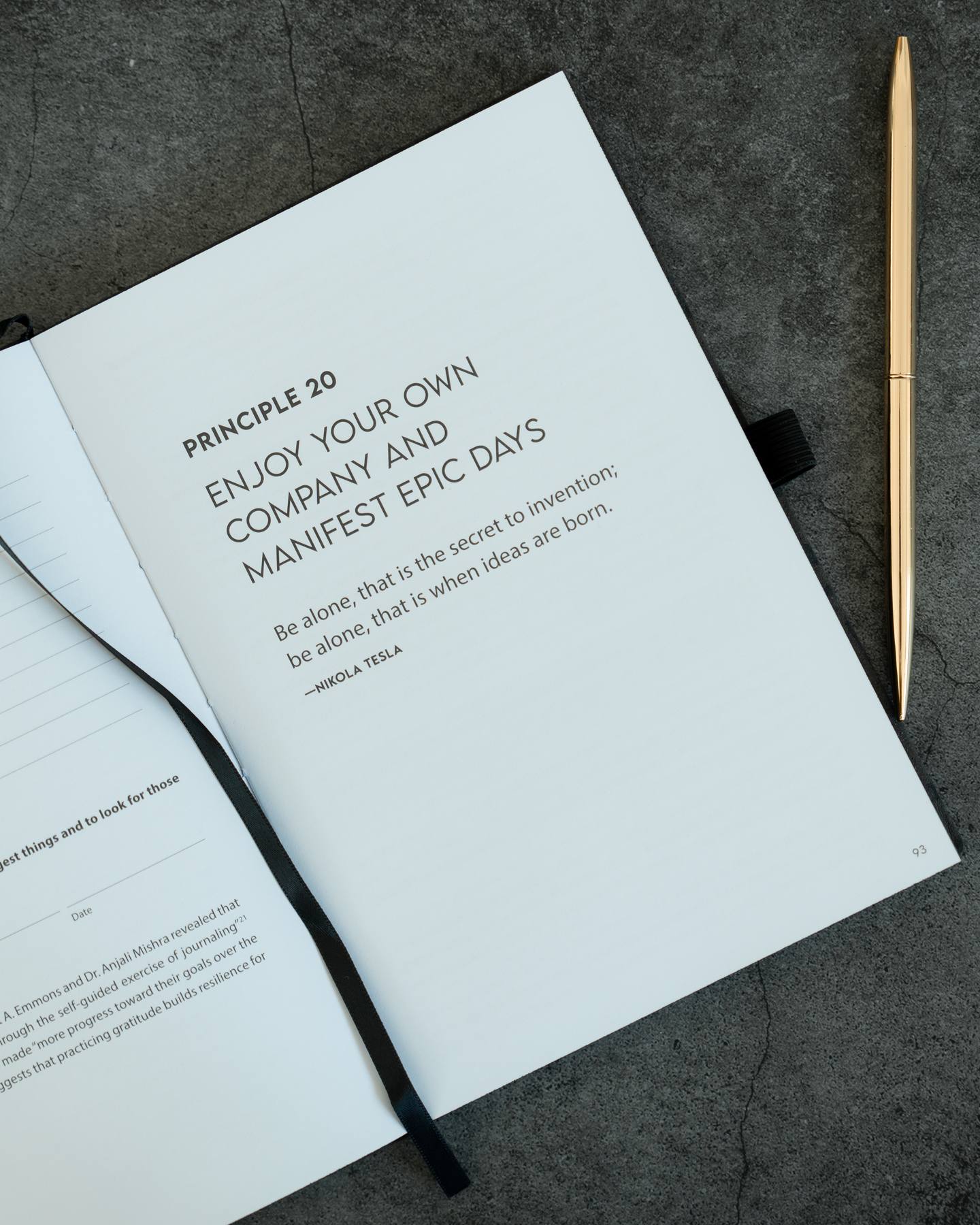
A journal helps by giving the noticing question somewhere to land before the thought has already run the rest of your day. Writing "they hated it" down on paper, next to the question "what did they actually say," creates a small gap between the thought and the reaction to it, which is the same gap these questions are designed to open. The Epic Journal's prompts are informed by techniques used in CBT, including this same distortion vocabulary, and each one pairs a question with a worked example and a short note on why the question matters, so the pattern is easier to notice the second and third time it shows up. It's built for a general audience: the same founder from the Tuesday-Thursday example above is just as likely to reach for it as anyone else moving through a season of change. It's not a stand-in for therapy, but a daily practice for the ordinary, non-clinical moments when a thought like "I always mess this up" shows up and you want to ask it one honest question.
Are all negative thoughts cognitive distortions?
No, not every negative thought is a distortion, some negative thoughts are simply accurate. If a presentation genuinely went badly because you were unprepared, "that didn't go well" is a fact, not catastrophizing. The distinction is whether the thought matches the evidence or overshoots it. Overgeneralization would sound like "I always blow presentations," stretching one real, specific event into a permanent rule. The noticing questions in the table above are built for exactly that gap, not to talk you out of every hard feeling, but to separate what actually happened from the harsher, wider story your mind builds on top of it.
What exactly is a cognitive distortion?
A cognitive distortion is a habitual, biased way of interpreting a situation, one that makes it seem worse, more certain, or more personal than the evidence actually shows. The concept comes from cognitive behavioral therapy (CBT), and psychiatrist Aaron Beck first documented it while studying depression in the 1960s. Everyone's mind produces automatic thoughts, and a distortion is simply a recognizable, repeatable shape those thoughts tend to take.
Who came up with the list of 12 cognitive distortions?
Psychiatrist Aaron Beck identified the first several distortions in the 1960s and expanded the list in his 1979 book, Cognitive Therapy of Depression. His student David Burns later popularized a plain-English version in his bestselling book, Feeling Good, grouping them into ten forms of twisted thinking. The 12 entries here split two of Burns's paired categories into their own rows for easier scanning. It is not a different count that Beck or Burns themselves used, just this piece's own organization of the same well-documented material, which is not owned by any single book, app, or journal.
Is having cognitive distortions a sign of a mental health disorder?
No. Cognitive distortions are common, ordinary thinking patterns that show up in nearly everyone under stress, pressure, or uncertainty, not only in people with a diagnosed condition. Recognizing several of them in your own thinking doesn't mean something is wrong with you, it means you have a brain that takes shortcuts under pressure, like every other brain does. If a thinking pattern feels like it's affecting your safety or your ability to function day to day, that's worth bringing to a therapist or doctor rather than working through alone. If it's urgent, the 988 Suicide and Crisis Lifeline (call or text 988) or the Crisis Text Line (text HOME to 741741) can help right now.
What's the difference between mind reading and fortune telling?
Mind reading assumes you already know what someone else is thinking right now, usually something critical, without them actually saying so. Fortune telling assumes you already know how a future event will turn out, usually something negative, before it has happened. The two often chain together: an assumed negative thought about you, the mind reading, leads straight into a predicted negative outcome, the fortune telling.
Can journaling actually help with cognitive distortions?
Journaling can help by creating a small pause between an automatic thought and the reaction to it, giving you room to ask a simple question, like the ones in the table above, before the thought runs the rest of your day. The Epic Journal's prompts are informed by techniques used in CBT, including this same distortion vocabulary, and each one pairs a question with a worked example. It's designed as a daily practice, not a replacement for therapy.
What if journaling brings up something heavier than everyday negative thinking?
If what comes up feels like more than everyday stress, especially anything involving your safety, that's exactly what a therapist, doctor, or crisis line is for, not a journal. The 988 Suicide and Crisis Lifeline is available by call or text at 988, and the Crisis Text Line is available by texting HOME to 741741, both any time, day or night.